TIANJIN JINKE TECHNOLOGY CO.,LTD.
Send a Request
Leave Your Message
0%

Picking the right Scaffolding Materials in 2026 isn’t just about comparing prices, weights, or how quickly they can be delivered. Buyers around the world really need to dig deeper—think about load capacity, how well they resist corrosion, the quality of connections, inspection history, and whether they’re suitable for the climate. For tough projects, steel frames might be the go-to because they're super sturdy, but if you want something easier to handle and quicker to put together, aluminum systems could be a better fit. Timber still makes sense in certain situations, but you’ve got to pay close attention to moisture levels, grading, and any treatments used.

As scaffolding engineer Dr. John R. Pearson once said, “A scaffold is only as reliable as the material, the connection, and the inspection behind it.” That’s a rule of thumb that still holds true, whether you’re a contractor, distributor, or project owner operating in different markets. Something that works great on a dry city site might not hold up near salty coastal waters. And even a lightweight part that seems to save on labor could cause handling or stability issues if it's not properly engineered.

Little details really do matter. Buyers should ask for mill certificates, product testing reports, surface treatment info, and clear instructions for installation. It’s also smart to double-check if the couplers, base jacks, braces, and platforms are all compatible with the system you’re choosing. When you're buying internationally, things can get even trickier—packaging damage, vague specs, inconsistent sizes, and slow technical support can all end up causing delays or problems down the line.

The cheapest option isn’t always the best. What really counts is finding that balance between safety, durability, availability, and overall project costs. Sometimes, no choice is perfect—things change when you’re on-site, and even supplier claims need to be verified. This guide highlights some of the top scaffolding materials for global buyers, but remember: good judgment is key with every decision and specification you make.
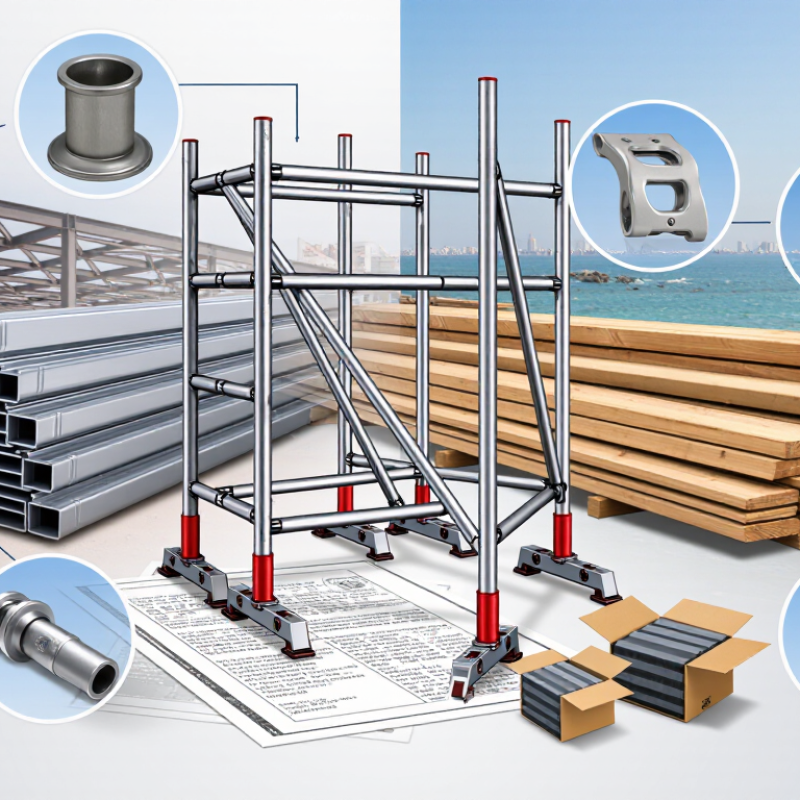
2026 Best Scaffolding Materials for Global Buyers

Scaffolding Materials: Definition, Functions, and Global Applications

Scaffolding materials are the structural components used to create temporary work platforms, access routes, and support systems. Common choices include steel, aluminum, timber, and engineered composite materials. Each option has different strength, weight, corrosion resistance, and handling needs. Steel suits heavy-duty construction, while aluminum helps crews move equipment more easily. Timber remains useful in selected applications, but its condition requires close inspection.

Scaffolding supports brickwork, painting, bridge maintenance, industrial repairs, and infrastructure projects worldwide. Global buyers should assess load capacity, platform dimensions, climate exposure, and replacement availability. Coastal air can accelerate corrosion. Cold conditions may affect material behavior and worker handling. Reliable suppliers should provide clear specifications, inspection guidance, and traceable quality documents. Scaffolding from JinKe can be evaluated through these practical criteria, rather than appearance alone. No material is perfect.

Tips: Compare tested load ratings before price. Check welds, joints, boards, and locking parts before every use. Store components above standing water. Follow local safety requirements and qualified inspection procedures. A small defect can become a serious weakness. Buyers should also question unclear certificates and unusually low quotations. That extra review may feel slow, but it protects workers and project schedules. Availability also matters. A strong system becomes less useful when replacement parts are difficult to obtain in another country.

2026 Best Scaffolding Materials for Global Buyers

Scaffolding materials are selected according to load capacity, weight, corrosion resistance, service environment, local regulations, and transport requirements. The chart compares representative material densities, which directly affect handling and transportation weight.

Global application guidance: Carbon steel is widely used for heavy-duty construction and industrial projects because of its high load capacity. Aluminum is preferred for lightweight mobile towers, maintenance, and indoor work. Stainless steel is suitable for highly corrosive or hygienic environments, including marine and food-processing facilities. Bamboo remains common in parts of Asia for low-rise construction where local standards and skilled assembly practices support its use. Fiberglass-reinforced plastic is useful near electrical hazards because it is electrically non-conductive.

Values are representative engineering values in kg/m³; actual density varies by alloy, grade, moisture content, manufacturing process, and product specification. Buyers should verify certified material standards and project requirements before procurement.

Key Factors for Selecting Scaffolding Materials in 2026

Global buyers need more than a low purchase price when selecting scaffolding materials in 2026. Steel remains a strong choice for heavy loads and repeated site use. Aluminum reduces handling effort, especially on projects requiring frequent relocation. Galvanized surfaces can improve corrosion resistance in wet or coastal environments. However, coating quality and surface preparation still matter.

Start with the working load, platform width, scaffold height, and expected climate. A supplier should provide test reports, material grades, dimensional tolerances, and traceable production records. For buyers comparing 20 Scaffolding configurations, these documents help separate practical options from attractive claims. Check whether components fit the intended system without forced modification. Small mismatches can create serious assembly problems.

Weight also affects transport, labor, and storage costs. Steel may last longer under harsh use, while aluminum can reduce installation fatigue. Composite materials may suit specific electrical or chemical environments, but their performance evidence requires careful review. Ask how the material behaves after repeated loading, impact, and outdoor exposure. Do not rely on certificates alone. Inspect samples, review independent testing, and confirm local compliance requirements before ordering.

No checklist is perfect. Field conditions change, and a material suitable for one site may fail economically elsewhere. I would reassess the decision after a trial assembly, especially when workers report awkward handling or unstable connections. Reliable sourcing includes clear inspections, replacement procedures, and honest limits on performance.

Steel Scaffolding: Strength, Durability, and Cost Considerations

Steel scaffolding remains a practical choice for global buyers who value strength, durability, and predictable site performance. World Steel Association data reports approximately 1.89 billion tonnes of crude steel production in 2023, showing the material’s extensive industrial supply base. Steel frames resist repeated loading, impact, and outdoor handling better than many lighter alternatives. They also feel stable underfoot, especially when workers move materials across platforms.

Strength still requires disciplined engineering. OSHA 29 CFR 1926.451 requires scaffolds to support their own weight and at least four times the maximum intended load. Local standards may differ, so buyers should confirm design calculations, testing documents, and compatible components. Hot-dip galvanizing can reduce corrosion, but it is not a permanent cure near saltwater or chemical exposure. ISO 12944 corrosion categories help specify protective systems more accurately. A small mistake here can become an expensive maintenance problem.

Steel usually costs more to transport than lightweight materials, yet repeated reuse can improve total ownership cost. Buyers should compare purchase price, freight, inspection, repair, storage, and expected service cycles. The UNEP Global Status Report for Buildings and Construction 2024 attributes 32% of global energy use and 34% of global carbon emissions to the buildings sector in 2022. Reusable steel may support lower replacement demand, but its production remains energy intensive. This trade-off deserves honest calculation, not optimistic marketing.

Aluminum Scaffolding: Lightweight Design and Portable Use

2026 Best Scaffolding Materials for Global Buyers

Aluminum Scaffolding: Lightweight Design and Portable Use

For global buyers, aluminum scaffolding offers a practical balance between strength and mobility. Its frames are lighter than many steel alternatives. Workers can carry sections through narrow doors, elevators, and finished interiors. Less lifting often means faster setup and reduced handling fatigue.

On active sites, portability depends on more than frame weight. Locking casters, folding platforms, adjustable legs, and compact storage dimensions affect daily performance. A well-designed tower can move across smooth flooring without excessive effort. However, uneven ground requires careful leveling and suitable stabilizers. Lightweight does not mean suitable for every load.

Buyers should check platform ratings, joint quality, corrosion resistance, and replacement-part availability. Aluminum usually performs well in humid environments, but dirt and damaged connections still need attention. Inspect welds, locking pins, braces, and caster brakes before each use. Follow the manufacturer’s instructions and local safety requirements.

In field evaluations, small design details often decide whether equipment feels genuinely portable. A narrow base may pass through a doorway, yet feel less stable at greater height. I have seen teams choose the lightest option, then struggle with balancing accessories and tools. That choice needs more thought. Clear load calculations and trained users matter as much as easy transport.

Timber and Composite Scaffolding: Benefits, Limits, and Applications

Timber and composite scaffolding serve different site needs in 2026. Timber remains practical for small repairs, interior work, and projects needing easy cutting. It feels familiar underfoot and can be adjusted with basic tools. However, moisture, knots, splitting, and repeated loading can reduce its reliability. Each piece needs careful inspection before use.

Composite scaffolding offers resistance to corrosion, moisture, and many common chemicals. It suits coastal construction, damp industrial areas, and sites where electrical isolation matters. Its lighter components can reduce handling effort. Yet composite systems may cost more and behave differently under heat, impact, or unusual loading. Do not assume lighter means stronger.

Up Scaffolding buyers should match material choice with height, load, climate, storage, and assembly skill. On a windy site, secure connections and sound bracing matter more than material claims. A warped timber plank can be dangerous. A damaged composite tube can also hide weakness. Competent workers should follow the design, manufacturer instructions, and local safety requirements. Independent inspection is sensible, even when the system looks complete. Field decisions are rarely perfect; rushed substitutions and poor storage still create avoidable problems.

Material Standards, Safety Requirements, and Global Market Trends

2026 Best Scaffolding Materials for Global Buyers
Material Standards, Safety Requirements, and Global Market Trends

Global buyers are evaluating scaffolding beyond purchase price in 2026. Material standards now influence safety, service life, and customs acceptance. Steel systems need traceable grades, consistent welding, and reliable corrosion protection. Aluminum offers lighter handling, but requires careful checks for fatigue and deformation. Timber remains useful in some markets, yet moisture control is often underestimated. In field inspections, small surface defects can reveal deeper quality problems. No material is perfect.

Safety requirements differ by country, project type, and installation height. Buyers should request load calculations, factory test records, and clear assembly instructions. EN 12810 and EN 12811 guide many European projects, while other regions apply national codes. Certificates alone are not enough. A responsible Scaffolding Co should explain inspection intervals, worker training, and emergency procedures. Guardrails, toe boards, access ladders, and stable foundations need equal attention. I have seen schedules fail because delivery documents ignored local terminology. That mistake is avoidable.

Global market trends favor modular systems, recycled steel, digital traceability, and faster rental cycles. Circular procurement is growing as buyers measure reuse and end-of-life recovery. Supply chains remain uneven, so verify material origin and replacement-part availability. Lower-carbon claims deserve evidence, not attractive wording. Price pressure can still tempt teams to accept thin documentation. That deserves reflection. Some buyers overlook replacement-part availability until the first damaged frame arrives.

FAQS

How should buyers choose scaffolding material for a construction project?

Start with working load, platform width, scaffold height, and expected climate. Steel suits heavy loads and repeated use. Aluminum is easier to move. No material fits every site.

When is steel scaffolding a practical choice?

Steel handles heavy loads and demanding repeated use. It may last longer under harsh conditions. However, its weight increases transport and installation effort.

When can aluminum scaffolding reduce project costs?

Aluminum components are lighter and easier to relocate. They can reduce handling fatigue and labor effort. Check whether the system still meets the required load.

Is galvanized scaffolding suitable for wet or coastal environments?

Galvanized surfaces can improve corrosion resistance in damp or coastal areas. Coating quality still matters. Poor surface preparation can weaken the expected protection.

What should buyers request from a scaffolding supplier?

Request test reports, material grades, dimensional tolerances, and traceable production records. Confirm local compliance requirements. Documents support decisions, but they do not replace inspection.

What problems can occur when components do not fit properly?

Small dimensional mismatches can cause difficult assembly and unstable connections. Do not force components together. Confirm system compatibility before ordering.

What are the main advantages and limits of timber scaffolding?

Timber suits small repairs, interior work, and projects needing simple cutting. Inspect every piece for moisture, knots, warping, and splitting. A damaged plank can fail unexpectedly.

Where can composite scaffolding be useful?

Composite systems can resist corrosion, moisture, and many common chemicals. They may suit coastal, damp, or electrically sensitive areas. Review performance under heat, impact, and unusual loading.

Does a lighter scaffolding material always perform better?

No. Lighter components may reduce handling effort, but they may behave differently under impact or heavy loading. Weight alone is a weak selection guide.

What checks should happen before using scaffolding on site?

Inspect samples and review independent testing before ordering. Check connections, bracing, storage conditions, and replacement procedures. Reassess after trial assembly. Field experience may reveal overlooked problems.

Conclusion

Scaffolding Materials are essential components in temporary access and support systems used across construction, maintenance, industrial, and infrastructure projects. This overview explains how material choice affects load capacity, stability, worker safety, transport, assembly speed, and service life. In 2026, global buyers should evaluate project conditions, required strength, weather exposure, corrosion resistance, portability, reuse potential, total cost, and local availability before selecting a solution.

Steel scaffolding remains a preferred option for demanding projects because of its high strength, durability, and long-term value, although it is heavier and may require corrosion protection. Aluminum scaffolding offers a lightweight, portable design suited to indoor work, maintenance, and projects requiring frequent relocation. Timber and composite systems can provide practical alternatives for specific applications, but their performance, moisture resistance, inspection needs, and lifespan must be carefully assessed. Buyers should also verify applicable material standards, safety requirements, quality controls, and regional regulations while monitoring global trends such as modular designs, recyclable materials, improved surface treatments, and more efficient logistics.
Liam

Liam

Liam is a dedicated marketing professional at a renowned scaffolding manufacturer based in Tianjin, China, established in 1998. With a deep expertise in the scaffolding industry, he plays a crucial role in promoting high-quality and reliable products that support construction projects worldwide.......
Previous 2026 Top Scaffold Plank Types for Global Buyers