- Home
- About Us
- Products
- News
- FAQ
- Contact Us
Send a Request
Leave Your Message
Choosing the right Scaffold Plank Clamps isn’t just about comparing prices or scrolling through pretty product photos. Honestly, there’s a lot more to it. You gotta look into their load capacity, what tubes they fit, the size of the planks, the steel quality, surface treatments, and even check their inspection records. I mean, a clamp might look super solid sitting on a warehouse shelf, but the real test comes when it’s under shifting loads, damp timber, vibrations, or multiple installations. That’s when you really see what it’s made of.
Michael R. Garrison, who’s been in scaffold design for ages, once said, “A clamp is only as dependable as the plank, tube, and inspection behind it.” And honestly, that’s such a spot-on point. Good, reliable Scaffold Plank Clamps should hold boards tightly without squeezing the edges or causing sudden shifts. Also, their locking mechanisms need to stay practical, even if workers are wearing gloves. Sure, coatings like galvanization help with rust and corrosion, but don’t be fooled—coating quality isn’t the same as structural strength.
Pay attention to the little things, too. Check the threads—they should be precise. Look at how the jaws line up. Examine the welds; they should be consistent. And don’t be shy about asking for test reports, drawings, and info on the materials used—that stuff matters. Remember, regional standards and site-specific requirements can vary quite a bit, so one size definitely doesn’t fit all. Before placing your order, it’s a smart move to double-check everything with qualified engineers and local safety authorities.
This guide is all about comparing some of the top Scaffold Plank Clamps for international buyers in 2026. We’re looking at performance, durability, how easy they are to install, the reliability of the supplier, and overall value over time. Keep in mind, no clamp is perfect. Even the best products can fail if overloaded, not fitted properly, or if inspection procedures are skipped. That’s an uncomfortable truth, but it’s an important one to consider when making your choice. Skimping on price might save you money now, but could lead to costly setbacks later. Playing it safe with a careful selection is really the wiser investment in the long run.
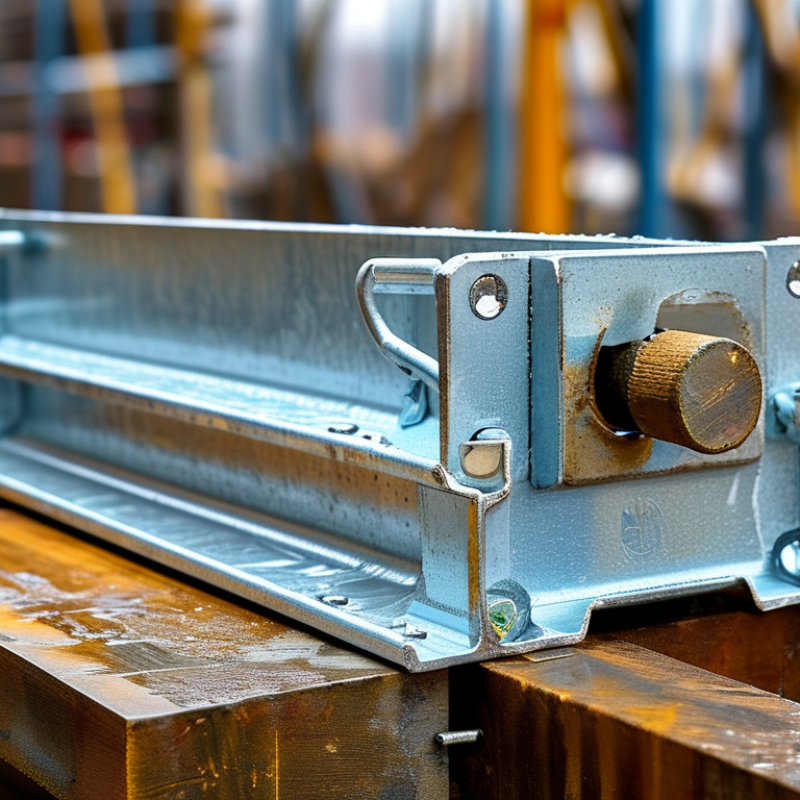
Scaffold plank clamps are mechanical fittings that hold scaffold boards firmly against supporting tubes or frames. They usually use a shaped jaw, a plate, and a tightening bolt. When tightened correctly, the clamp reduces plank movement, lifting, and sideways shifting caused by workers, tools, or wind.
The working principle is simple. The jaw grips the plank edge or its supporting member, while the bolt creates controlled pressure. This pressure must be strong enough to resist movement without crushing timber or damaging metal components. Plank thickness, support spacing, surface condition, and clamp capacity all matter. A loose fitting can look acceptable from the ground.
During a site inspection, check threads, jaws, bolts, and contact surfaces for distortion, corrosion, or contamination. Remove damaged parts from service. The plank should sit flat, with no rocking or excessive gaps. Do not treat Scaffold Ladder Clamps as plank clamps; ladder clamps secure ladder sections to a scaffold structure and serve a different purpose.
Installation should follow the fitting manufacturer’s instructions and the project’s approved scaffold design. A trained, competent person should verify the arrangement before use. Load assumptions deserve careful attention, especially when materials are stored on the platform. More clamps do not automatically create a safer platform. They can even hide poor plank alignment. Small details matter. Structural checks and regular inspections remain necessary because clamps support a system, not a single board.
Scaffold plank clamps are mechanical securing devices used to prevent scaffold boards or platform planks from shifting, lifting, or separating from their supporting members. They normally work by applying clamping pressure to the plank edge or by connecting the plank to a transom, bearer, or frame member. Actual dimensions, working loads, and permitted applications must always be confirmed against the product marking, installation instructions, and the applicable local scaffold regulations.
| Clamp category | Primary function | How it works | Typical compatible plank or support | Typical adjustment range | Common material | Typical application | Important limitation |
|---|---|---|---|---|---|---|---|
| Plank end clamp | Reduces longitudinal movement and helps retain the ends of adjacent boards. | A jaw, plate, or bolt assembly grips the board end or edge and transfers restraint to the supporting member. | Timber scaffold boards or metal-edged platform planks; exact profile depends on the clamp design. | Commonly about 35–50 mm board thickness; verify before purchase. | Galvanized steel or zinc-plated steel; some components may use stainless steel. | Board-end restraint on working platforms and access decks. | It is not automatically a substitute for a complete platform-support system or edge protection. |
| Plank-to-transom clamp | Secures a plank to a tube, bearer, transom, or horizontal support. | The lower saddle engages the support while an upper plate or bolt applies downward clamping force to the plank. | Planks installed over circular scaffold tubes, rectangular bearers, or proprietary transoms. | Tube or support sizes are product-specific; common tube outside diameters in tube-and-fitting scaffolding include approximately 48.3 mm. | Hot-dip galvanized carbon steel is widely used for outdoor scaffold fittings. | Preventing board bounce, sliding, or uplift at support locations. | The clamp must match both the support geometry and the board thickness. |
| Board-to-board joining clamp | Maintains alignment between adjacent planks. | A bridging plate or linked clamp spans the joint and holds the boards together against lateral separation. | Boards with similar thickness and closely matched top surfaces. | Usually designed for a narrow joint gap; the permitted gap must be taken from the technical drawing. | Pressed or fabricated galvanized steel. | Temporary platform assembly and anti-separation control. | It does not increase the structural capacity of a plank or replace adequate support spacing. |
| Toe-board clamp | Holds a toe board at the platform perimeter to help limit falling objects. | A vertical or angled bracket grips the toe board and attaches to the platform edge, scaffold tube, or guardrail support. | Timber or metal toe boards with dimensions permitted by the applicable safety rules. | Commonly accommodates board thicknesses around 25–50 mm, depending on design. | Galvanized steel or coated steel. | Platform perimeter protection and material-retention systems. | Toe-board requirements differ by jurisdiction and should be checked separately from plank-retention requirements. |
| Universal adjustable plank clamp | Provides one clamp format for several board thicknesses or support configurations. | A slotted hole, threaded screw, pivoting jaw, or interchangeable insert allows the clamping position to be changed. | Different timber board thicknesses or mixed support profiles within the stated range. | Often approximately 25–50 mm, but the verified product range takes priority. | Galvanized steel with a high-strength threaded fastener. | Rental fleets, maintenance work, and projects using more than one plank profile. | A wide adjustment range does not guarantee compatibility with every plank or tube. |
| Anti-uplift plank clamp | Restrains vertical lifting caused by wind, vibration, or accidental impact. | A top retainer overlaps the plank while the base is fixed to the support, creating a positive mechanical hold-down. | Boards installed on supports where uplift resistance is specifically required. | Determined by the plank thickness and the clearance between the plank and retainer. | Galvanized or corrosion-protected steel. | Exposed platforms, temporary decks, and locations subject to wind or vibration. | Wind resistance must be engineered for the complete scaffold; a clamp alone does not establish system stability. |
| Data dimension | Practical specification or reference value | Why it matters | Buyer verification point |
|---|---|---|---|
| Typical timber scaffold-board thickness | Approximately 38 mm for many standard timber scaffold-board profiles; other regional sizes are also used. | The clamp jaw must close correctly without crushing or leaving excessive clearance. | Measure the actual board, not only the nominal size. |
| Common board widths | Widths around 225–235 mm and 286–300 mm are found in commonly used timber plank systems, depending on the regional standard. | Width affects platform coverage, clamp position, and permissible support arrangement. | Confirm the intended board standard and dimensional tolerances. |
| Typical scaffold tube reference | Approximately 48.3 mm outside diameter is widely used for tube-and-fitting scaffold systems. | A clamp made for a different tube diameter may not seat correctly or develop its rated restraint. | Check outside diameter, wall thickness, and support shape. |
| Common corrosion protection | Hot-dip galvanizing or zinc plating is commonly specified for steel scaffold fittings used outdoors. | Coating protects the steel during storage, transport, and outdoor exposure. | Request coating type, coating thickness, salt-spray data where relevant, and inspection criteria. |
| Working-load data | There is no single universal working-load value for all scaffold plank clamps; the rating is design- and application-specific. | A clamp may restrain movement without being designed to carry the full platform load. | Obtain the declared safe working load, test method, safety factor, and installation torque. |
| Fastener type | Threaded bolts, captive screws, wing nuts, or hinged locking mechanisms are common designs. | The fastener controls installation speed, repeatability, and resistance to loosening. | Check thread size, grade, captive design, torque requirement, and replacement availability. |
| Applicable compliance route | Requirements may involve local scaffold regulations, structural calculations, product testing, and relevant standards such as EN 74 for certain scaffold couplers. | Not every plank clamp is covered by the same standard or approval route. | Match the product documentation to the destination country and intended scaffold system. |
| Inspection condition | Reject clamps with cracks, severe corrosion, distorted jaws, damaged threads, missing parts, or unreliable locking action. | Damage can reduce clamping force and create a hidden failure point. | Define pre-use inspection, cleaning, lubrication, quarantine, and replacement procedures. |
: It is a mechanical fitting that holds a scaffold plank against a supporting tube or frame. It helps limit lifting, rocking, and sideways movement.
A shaped jaw grips the plank edge or support member. A tightening bolt applies controlled pressure. Too little pressure allows movement. Too much may crush timber.
Check the threads, jaws, bolts, and contact surfaces. Look for corrosion, distortion, dirt, or cement residue. Remove damaged clamps from service.
The plank should rest flat and remain stable under normal movement. There should be no rocking or excessive gaps. A fitting can look secure from below but still be loose.
No. More clamps cannot correct poor plank alignment or weak supports. They may hide an underlying problem. The whole scaffold system still needs inspection.
High-strength steel and controlled threading are practical choices. A durable corrosion-resistant finish helps in rain and cement dust. Protected fasteners can improve service life.
Ask for exact product classification, load ratings, batch numbers, and inspection records. Request evidence from load testing when available. Vague specifications deserve caution.
No. They serve different purposes. Plank clamps secure boards. Ladder clamps secure ladder sections to a scaffold structure.
A trained, competent person should verify the arrangement before use. Follow the approved scaffold design and fitting instructions. Small details matter.
Plank thickness, support spacing, surface condition, and clamp capacity all affect performance. Stored materials can increase platform loads. The clamp supports a system, not one board.
This guide explains how Scaffold Plank Clamps secure boards, create stable working platforms, and support safe access systems when correctly installed. It compares common clamp types for different scaffold layouts and applications, while outlining important considerations such as material strength, corrosion resistance, dimensions, board compatibility, and rated load capacity. Readers will also learn how clamp design, locking mechanisms, surface finish, and manufacturing consistency can influence durability and workplace safety.
For global buyers in 2026, the article highlights practical features including quick installation, adjustable sizing, reliable grip, weather resistance, clear load information, and compatibility with regional scaffolding requirements. It provides a straightforward method for evaluating product quality through documentation, inspection, testing, and supplier communication. Finally, buyers can use guidance on comparing specifications, total cost, order quantities, delivery conditions, and after-sales support to select Scaffold Plank Clamps that match their project needs and help maintain dependable platform performance.