Honestly, picking the best Scaffolding Rig isn't really about choosing the biggest system out there or grabbing the lowest quote. What actually fits depends on a bunch of things: how tall the project is, the working loads, site access, climate, transport limits, and local rules. A rig that works great for a tight urban renovation can easily struggle on a coastal site with strong winds and salt in the air. So yeah, the answer is conditional. You know, it's the little details that really matter.
Experienced global buyers don’t just look at product photos—they dig deeper. They’ll go through load tables, material specs, welding procedures, surface protection, inspection records, and whether replacement parts are actually available. They also want to know if the manufacturer can provide clear assembly instructions and practical training. A reliable supplier, in my view, should be upfront about limitations rather than promising that the product works everywhere. Honestly, having independent quality checks in place can really give you some peace of mind—especially once orders start crossing borders and communication slows down.
When you're doing a real professional evaluation, don't just look at tube-and-fitting systems, frame systems, mobile towers, and modular solutions in isolation. Compare them to how your team actually works day to day. Galvanized steel? Sure, it can offer durability. Aluminum, on the other hand, can help reduce handling weight. But honestly, neither one is automatically the better choice. That assumption can easily fall apart. And don't sleep on packaging, either. Bent frames, missing pins, or labels that don't make sense can delay a project before anyone even starts installing. Before you commit, get the key stuff in writing—dimensions, tolerances, documentation, delivery terms, and after-sales support. If possible, have a local engineer or a good inspector check that it's actually suitable before you start using it. No checklist is ever perfect, of course. But a careful process still cuts down on the avoidable risks, and it helps global buyers pick a Scaffolding Rig that's practical, traceable, and dependable.
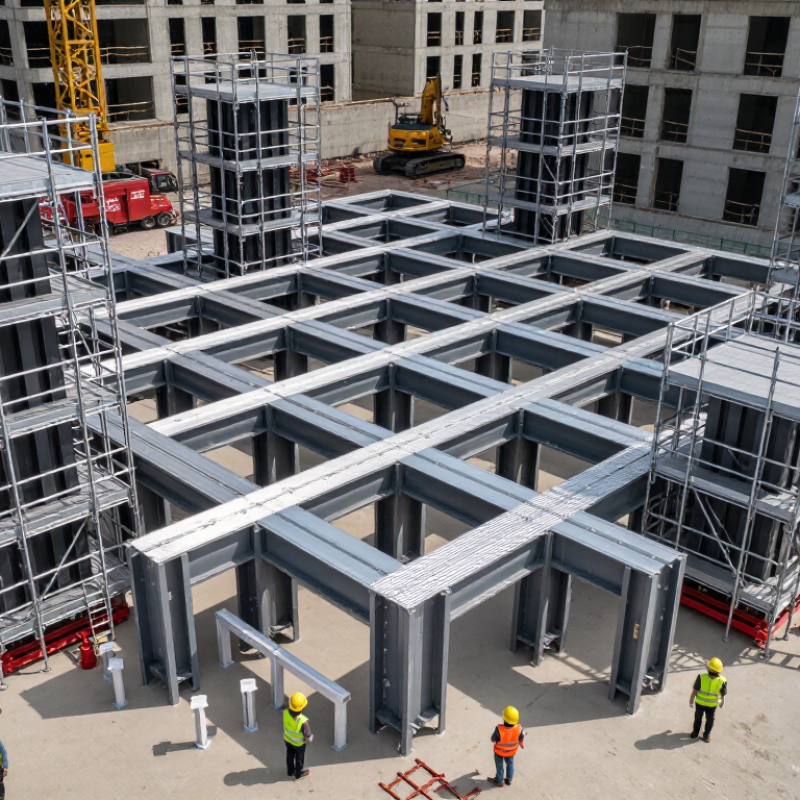
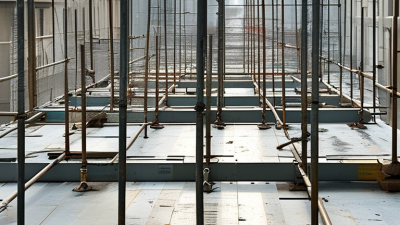
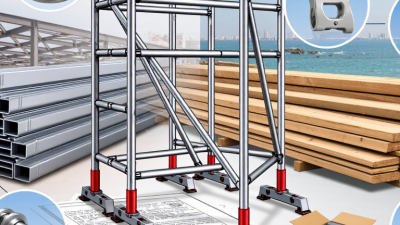
A scaffolding rig is a temporary access and support system for workers, tools, and materials. It usually includes vertical standards, horizontal ledgers, platforms, braces, couplers, base plates, and guardrails. These parts work together to transfer loads safely to the ground. The rig must remain stable while workers move, equipment shifts, and weather changes.
The best scaffolding rig depends on the project, not simply the lowest price. A tower may suit indoor maintenance, while a modular system can support irregular façades and changing heights. Global buyers should check rated load capacity, platform dimensions, corrosion protection, adjustment options, and replacement-part availability. Clear assembly instructions matter too. A strong frame can still fail through poor bracing or uneven foundations. That detail is easy to underestimate.
Tips: Ask for load tables, material specifications, inspection records, and independent test evidence. Confirm that components fit together without forced modification. Check local requirements before ordering, because accepted practices differ between regions. Packaged parts should have visible labels and practical lifting points. I would also request a sample connection before a large purchase. Drawings can look perfect. Site conditions rarely do. Mud, wind, limited storage, and rushed assembly may expose weaknesses that a catalogue never shows. A reliable supplier should discuss these risks openly, not promise that one rig fits every job.
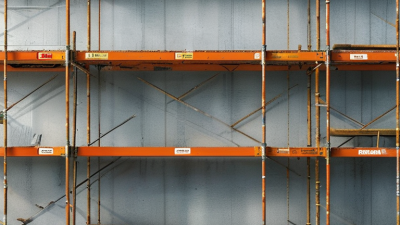
The best scaffolding rig depends on height, load, access, and site movement. Frame scaffolding suits repetitive façades and low-to-medium-rise projects. It installs quickly on level ground. System scaffolding works better for complex structures, including industrial plants and irregular platforms. Its rosettes or modular joints improve flexibility, but trained assembly remains essential.
For narrow indoor areas, mobile towers provide fast repositioning and limited working height. Locking castors, stabilizers, and platform gates need daily checks. Tube-and-clamp scaffolding offers strong adaptability around pipes, tanks, and uneven geometry. It takes longer to assemble. Suspended platforms support high-rise façade maintenance where ground space is restricted. Wind limits become a serious design factor.
Safety data explains why selection cannot rely on price alone. OSHA recorded 395 construction deaths from falls in 2022, making falls the leading category among the construction “Fatal Four.” OSHA 29 CFR 1926.451 also requires competent-person inspections before each work shift and after events that could affect integrity. EN 12811-1 sets performance requirements for temporary works equipment, including strength and serviceability.
For global buyers, Scaffolding from JinKe should be evaluated through load tables, material certificates, inspection procedures, and local compliance documents. A lighter rig is not automatically efficient. I would recheck wind exposure, foundation settlement, and worker training before approval. This step is often skipped. That is the weak point.
Global buyers should treat certification as a design-control question, not a logo check. For a 20 Scaffolding search, request the exact system drawing, load class, and material traceability. EN 12811-1 addresses performance and general design requirements for temporary works. ANSI/ASSP A10.8 and AS/NZS 1576 may apply in other markets. These standards are not interchangeable. Confirm the destination country’s rules before ordering. An independent laboratory report should identify the tested configuration, not merely the product family. That detail is easy to miss.
The ILO reports 2.78 million work-related deaths worldwide each year. OSHA estimates that scaffolds expose about 2.3 million construction workers in the United States. Its guidance links scaffold failures and falls to roughly 4,500 injuries and 50 deaths annually. The figures are not recent. They still demand attention. Ask for inspection records, training evidence, corrosion checks, and a clear maximum load. Photographs should show locked casters, complete platforms, and bracing at realistic height. Do not accept a generic certificate. Even careful buyers can overlook local wind calculations or mixed components. That is where purchasing checklists need more discipline. Safety improves when paperwork follows the scaffold from factory to site.
Global buyers should judge a rig by evidence, not appearance. Steel tubing offers strong resistance to impact and heavy loads. Galvanized surfaces help reduce rust in wet environments. Aluminum is lighter, but it may need stricter control around dents and fatigue. Check tube thickness, weld quality, coupler fit, and surface treatment. Small defects can become serious under repeated assembly.
Load capacity needs more than a single headline number. Ask for working-load data, maximum bay dimensions, platform spacing, and safety factors. Include workers, tools, stored materials, wind, and movement in the calculation. A platform carrying tile behaves differently from one carrying hand tools. Never rely on guesswork. The data plate should match the technical drawings and inspection records.
Durability also depends on daily handling. Bent frames, missing pins, and loose braces often appear after transport, not production. Review testing from competent, independent laboratories where available. Compare corrosion performance, fatigue testing, replacement-part access, and clear maintenance instructions. Up Scaffolding may look efficient on paper, yet its real value appears after months of assembly and exposure. One practical lesson is easy to miss: lighter rigs save labor, but fragile components can increase downtime. The cheapest choice may not stay cheap.
Choosing the best scaffolding rig starts with supplier evidence, not the lowest quotation. A reliable supplier should show factory audit records, material certificates, load-test results, and clear delivery terms. OSHA estimates that 65% of construction workers use scaffolds annually in the United States. It also reports about 4,500 scaffold-related injuries and 50 deaths each year. These figures make engineering quality more important than a small unit-price difference.
Pricing should include steel grade, tube thickness, welding hours, surface treatment, packaging, transport, and replacement parts. A cheap quote can hide thin components or weak protective coating. Ask for a cost breakdown. Request samples before approving a large order. Customization matters when projects require unusual heights, narrow platforms, adjustable bases, or special access points. However, every modification should include updated drawings and load calculations. Custom work is useful, but it can also create delays.
Production quality needs measurable checks. The ISO Survey 2022 recorded about 1.26 million ISO 9001 certificates worldwide, yet certification alone does not prove consistent workmanship. Inspect weld penetration, pin fit, frame dimensions, corrosion protection, and batch traceability. Photograph random pieces during inspection. In practice, one overlooked tolerance can affect an entire rig. No supplier scorecard is perfect. Recheck assumptions when the factory changes materials, operators, or subcontractors.
| Scaffolding Rig | Typical Supplier Type | Indicative Export Price | Common Material & Finish | Customization Capability | Typical Production Lead Time | Production Quality Indicators | Best Fit for Global Buyers |
|---|---|---|---|---|---|---|---|
| Ringlock System Scaffold |
Large export-oriented metal fabricator Usually operates automated welding lines, hot-dip galvanizing capacity, and dedicated inspection teams. |
USD 1,100–1,700 per metric tonne FOB | Q235 or equivalent structural steel; hot-dip galvanized finish commonly specified at approximately 55–85 μm average coating thickness. | High. Ledger lengths, rosette spacing, base collars, stair units, platforms, toe boards, and packaging can usually be adapted to project requirements. | 30–50 days for repeat designs; 45–70 days for new tooling or major engineering changes. | Dimensional inspection of rosettes and ledgers, weld visual inspection, coating-thickness testing, load testing of standards and platform components, and material certificates. | Large commercial, industrial, infrastructure, and high-rise projects requiring fast assembly and repeated configuration. |
| Cuplock System Scaffold |
Established structural-tube manufacturer Often supplies standardized components in high volume with relatively limited design variation. |
USD 950–1,500 per metric tonne FOB | Structural steel tube with painted, pre-galvanized, or hot-dip galvanized surface treatment. | Medium to high. Standard cups, blades, standards, transoms, and braces are readily configurable, while non-standard connection geometry may require tooling. | 25–45 days for standard products; 40–60 days for custom components. | Tube-wall measurement, cup and blade dimensional checks, weld penetration review, straightness inspection, and random assembly-load verification. | General construction, maintenance, shipyards, and buyers prioritizing standardized components and competitive bulk pricing. |
| Frame Scaffold |
High-volume frame-scaffold producer Best suited to suppliers with dedicated tube forming, welding, jigging, and automated coating lines. |
USD 850–1,350 per metric tonne FOB | Welded structural steel frames; painted, powder-coated, or hot-dip galvanized finish depending on corrosion requirements. | Medium. Frame width, height, walk-through design, brace dimensions, plank type, and locking details can commonly be modified. | 20–40 days for standard frames; 35–55 days for customized sizes. | Frame squareness, diagonal measurement, weld consistency, pin-hole alignment, brace fit, surface adhesion, and platform slip-resistance checks. | Low- to mid-rise building work, residential construction, painting, plastering, and markets requiring simple installation. |
| Tube-and-Clamp Scaffold |
Tube and forged-fitting specialist Quality depends strongly on forging control, heat treatment, thread accuracy, and corrosion protection. |
USD 1,000–1,800 per metric tonne FOB | Structural steel tubes with forged steel or malleable iron couplers; galvanized or painted finish. | Very high. Tube lengths, swivel couplers, right-angle couplers, sleeve couplers, beam clamps, base jacks, and special fittings can be combined for irregular structures. | 25–50 days for standard fittings; 45–75 days for special forged parts or new dies. | Coupler slip-resistance testing, bolt torque verification, thread-gauge inspection, forging hardness checks, tube straightness, and zinc-coating inspection. | Complex geometry, curved structures, temporary works, repair projects, and sites where dimensional flexibility is more important than speed. |
| Aluminum Mobile Tower |
Aluminum access-equipment specialist Typically requires advanced extrusion, TIG/MIG welding, caster assembly, and stability-testing capability. |
USD 450–1,200 per tower set FOB | 6061-T6 or 6082-T6 aluminum alloy components; welded or mechanically assembled frames with non-marking casters. | High. Platform height, deck size, stabilizer arrangement, caster diameter, guardrail system, folding design, and access ladder can be customized. | 30–55 days for standard models; 45–75 days for customized tower designs. | Alloy traceability, weld quality, caster braking performance, platform deflection, guardrail strength, base stability, and complete tower assembly testing. | Indoor maintenance, electrical installation, aviation, warehousing, retail facilities, and applications requiring low weight and frequent relocation. |
| Heavy-Duty Shoring System |
Engineering-led temporary-works manufacturer Usually provides structural calculations, layout drawings, and project-specific load documentation. |
USD 1,300–2,200 per metric tonne FOB | High-strength structural steel, adjustable jacks, heavy-duty frames, U-heads, base plates, and bracing members; galvanized or painted finish. | Very high. Load capacity, bay dimensions, jack travel, frame profiles, bracing layouts, and connection systems are commonly engineered per project. | 45–80 days, depending on engineering approval, tooling, and testing requirements. | Verified steel grade, weld procedure qualification, jack-load testing, dimensional tolerance reports, stability calculations, and traceable inspection records. | Concrete formwork support, bridge construction, industrial plants, heavy loads, and projects requiring documented engineering performance. |
| Specialized Industrial Access Scaffold |
Project-based fabrication and engineering supplier Usually combines standard scaffold components with fabricated stairs, platforms, handrails, and access modules. |
USD 1,500–2,800 per metric tonne FOB | Structural carbon steel or aluminum, galvanized steel grating, anti-slip platforms, guardrails, stairs, and modular access components. | Very high. Layouts, access heights, platform geometry, handrail arrangement, stair angle, loading zones, and site interfaces can be engineered. | 50–90 days, including drawings, technical approval, fabrication, and pre-shipment inspection. | Approved fabrication drawings, weld inspection, load-path verification, platform deflection testing, anti-slip checks, coating inspection, and full assembly review. | Refineries, power plants, shipbuilding, chemical facilities, maintenance shutdowns, and other complex industrial environments. |
What Is the Best Scaffolding Rig for Global Buyers?
Global buyers need more than a strong scaffolding rig. Shipping, installation, maintenance, and after-sales support can determine project success. A reliable Scaffolding Co should provide accurate packing lists, loading diagrams, and export documents. Crated components need protection from moisture, impact, and corrosion during long sea journeys. Confirm local import rules before dispatch. Delays at customs can affect labor schedules and rental costs.
Installation support matters greatly. The supplier should provide clear drawings, load calculations, and anchoring instructions. These documents must match local safety standards and site conditions. Remote video guidance can help, but it cannot replace a qualified site supervisor. Uneven ground, strong winds, and nearby power lines require careful assessment. Small mistakes become expensive quickly.
Maintenance planning should begin before delivery. Inspect frames, pins, braces, platforms, and wheels after every major use. Record damaged parts with photographs and inspection dates. Keep common replacement parts near the worksite. After-sales support should include technical advice, spare-part availability, and defined response times. Warranty conditions must explain coverage, exclusions, and transport responsibilities. One project team underestimated replacement needs. The work stopped for three days. That mistake was avoidable. No checklist is perfect. However, honest reviews and regular inspections expose weak assumptions before they become site problems.
Brand-neutral benchmark scores for shipping, installation, maintenance, and after-sales support readiness.
The benchmark uses a 0–100 planning score, where a higher value indicates easier global deployment. Modular ringlock and frame systems generally score well for rapid installation and repeatable assembly, while tube-and-clamp systems offer flexibility but typically require more labor and technical supervision. Actual results depend on local regulations, packing design, site conditions, training, spare-parts availability, and service response times.
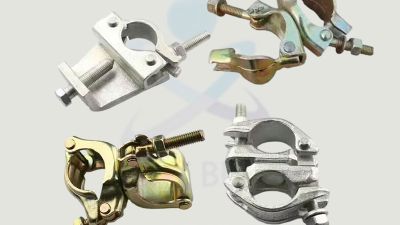
Drop forged scaffolding couplers provide a dependable way to create safer, stronger pipe connections on demanding jobsites. Unlike lightweight fittings formed from thinner materials, drop forging compresses steel under high pressure, producing a dense, impact-resistant component with consistent strength around the connection point. Hot-dip galvanizing or galvanized protection also helps resist corrosion caused by moisture, dust, and outdoor exposure. According to the U.S. Occupational Safety and Health Administration (OSHA), approximately 2.3 million construction workers use scaffolds each year, while scaffold-related incidents continue to cause thousands of injuries. Reliable couplers are therefore an important part of a properly designed and inspected access system.
Multi-type scaffolding clamps and pipe clamps support practical assembly across ring lock and cup lock scaffolding configurations. Right-angle, swivel, sleeve, and specialized connection options allow tubes to be joined securely for working platforms, guardrails, bracing, and temporary support structures. When correctly installed, compatible couplers help maintain alignment, reduce unwanted movement, and distribute loads more evenly through the scaffold framework. CE-certified drop forged galvanized couplers offer a dependable fastening solution for construction projects in different climates and international markets.
Product performance still depends on correct tube dimensions, tightening procedures, load calculations, and routine inspection. Supervisors should check for deformation, damaged threads, excessive rust, and incomplete engagement before every shift, following applicable scaffolding standards and site safety procedures.
Frame scaffolding works well on level ground. It installs quickly for repeated façade sections. Not always.
System scaffolding suits irregular platforms, industrial structures, and complex access routes. Modular joints improve flexibility. Trained assembly remains essential.
Mobile towers allow quick repositioning in restricted spaces. Check locking castors, stabilizers, and platform gates daily. Small errors grow.
Tube-and-clamp systems adapt around pipes, tanks, and uneven shapes. Assembly takes longer. Plan extra labor and inspection time.
They suit tall façades where ground space is limited. Wind exposure becomes a serious design factor. Weather limits need clear procedures.
Request load tables, material certificates, drawings, packing lists, and compliance documents. Confirm they match local site conditions and safety requirements.
Protect components from moisture, impact, and corrosion. Review loading diagrams and export papers. Confirm local import requirements before dispatch.
No. Video guidance can support assembly, but qualified supervision remains necessary. Uneven ground and nearby power lines need careful assessment.
Inspect frames, pins, braces, platforms, and wheels after major use. Photograph damage and record inspection dates. Keep replacement parts nearby.
Choosing only by price can create delays and safety risks. Recheck wind exposure, foundation settlement, training, and spare-part availability. This step gets skipped.
Choosing the best Scaffolding Rig for global construction projects requires a clear understanding of its structure, working principles, and suitability for different applications. Buyers should compare system, frame, and mobile options according to project height, site conditions, mobility needs, and expected loads. Safety is essential, so products should meet relevant international standards and include reliable documentation, tested components, and clear instructions. Material quality, corrosion resistance, load capacity, stability, and long-term durability should also be carefully evaluated.
Global buyers should assess suppliers through production quality, inspection procedures, customization capabilities, lead times, and transparent pricing rather than focusing only on the lowest offer. Shipping arrangements, packaging, installation guidance, spare parts, maintenance requirements, and after-sales support can significantly affect total ownership costs. A dependable supplier should provide accurate technical specifications, consistent quality control, responsive communication, and practical support throughout the product’s service life. By reviewing performance, compliance, logistics, and service together, buyers can select a safe, durable, and cost-effective scaffolding solution for their construction needs.