TIANJIN JINKE TECHNOLOGY CO.,LTD.
Send a Request
Leave Your Message
0%

Honestly, when it comes to picking the best steel scaffolding for 2026, you don’t start with the product label—you start with the worksite itself. That narrow renovation? It’s going to need a totally different setup than a big concrete pour. You’ve got to think about ground conditions, working height, load, access, how the crew will assemble it... and yeah, the crew’s experience matters just as much. The right frame feels solid underfoot, but the wrong one? You’ll be dealing with awkward access and costly delays. Bottom line: there’s no one-size-fits-all system.

If you're going to compare these properly, you really need to look at frame, tube-and-coupler, and modular systems—and then get into where each one shines and where it doesn't. And please don't lump steel props, adjustable steel props, shoring props, telescopic steel props, and formwork props together like they're the same thing. They're not. OSHA’s scaffold rule lays out a pretty clear benchmark: every scaffold and scaffold component has to be able to support its own weight plus at least four times the maximum intended load — without failing. But honestly, that’s more of a starting point than a green light. You still need sound engineering and checks that actually reflect the conditions on your site.

You know, details really do matter on a jobsite. Before you use anything, take a second to inspect the locking pins, base plates, braces, and connections — one bent component can completely change how a bay behaves.

This guide takes a practical look at the scaffold types you'll actually come across, what they're typically used for, and what to weigh up when choosing in 2026. And hey, some jobsite choices are still imperfect. But that's exactly why they deserve a second look, not a sales pitch.
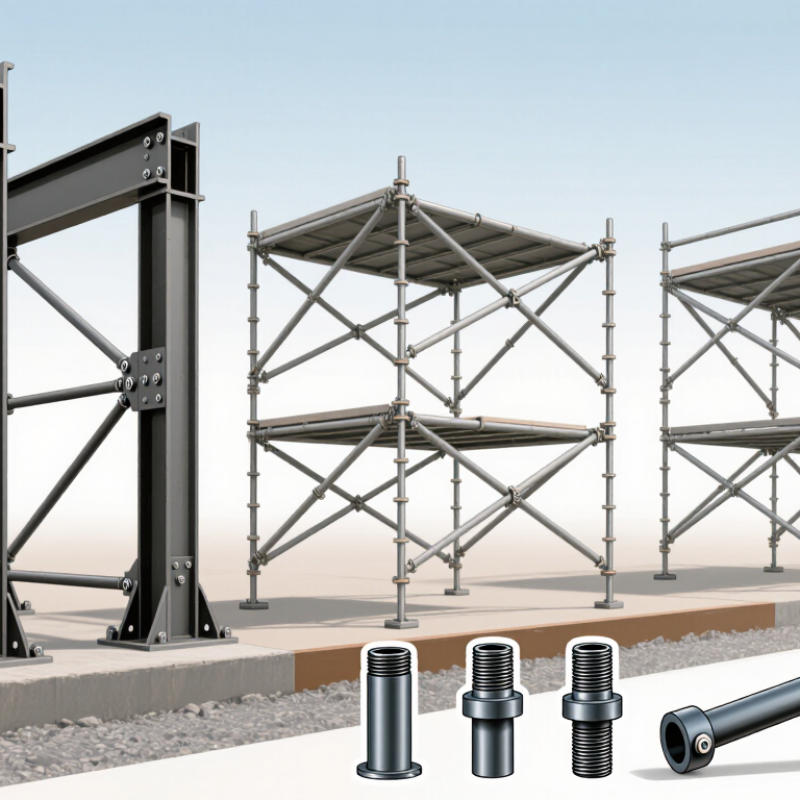
What Are the Best Steel Scaffolding Types in 2026?

How Steel Scaffolding Is Defined and Classified

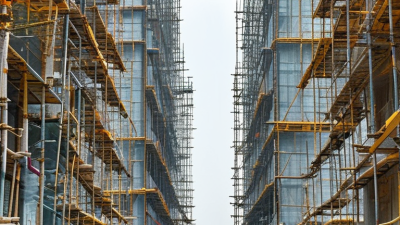
Steel scaffolding is a temporary structure made mainly from steel members that support workers, tools, and materials during construction or maintenance. A typical setup uses vertical standards, horizontal ledgers, cross-braces, base plates, and working platforms. The exact arrangement depends on the building, ground conditions, access needs, and expected loads. It is not simply a collection of metal frames.

Classification often starts with the connection and structural system. Frame scaffolding uses prefabricated frames joined with braces. Tube-and-coupler scaffolding connects separate steel tubes with clamps, allowing flexible layouts around irregular walls. Modular system scaffolding uses repeated connection points on standards, so ledgers and braces can be fitted at planned intervals. Mobile towers are another configuration, built on lockable wheels for limited repositioning on suitable, level surfaces. That distinction matters.

Scaffolding can also be described by its duty or intended use, such as access, façade work, or heavier material support. These labels do not create one universal load rating; specifications and local requirements vary. On site, a loose coupler, bent brace, or soft patch beneath a base plate can change how the structure behaves. Check the design, connections, foundations, platform edges, and inspection records before use. The categories help, but real installations rarely fit a neat diagram perfectly.

Which Factors Determine the Best Steel Scaffolding Type in 2026?

Choosing Steel Scaffolding starts with the work, not the catalogue. The platform must carry workers, tools, and materials without exceeding its rated capacity. Height, bay spacing, and the building’s shape also affect stability and access. A masonry crew handling heavy blocks has different needs from painters carrying light equipment. Small details matter.

Ground and weather can change the choice. On firm, level ground, a frame system may suit repetitive work and quick assembly. Uneven surfaces or awkward building profiles may call for adjustable components or a modular arrangement. Wind exposure matters on open sites and at greater heights. So does space: narrow streets can make bulky components difficult to deliver and position. Not every site is straightforward.

Compare setup time, transport, and the skills of the crew. A system that looks efficient on paper may slow work if workers need unfamiliar connections or constant repositioning. Check component condition, compatible parts, load ratings, and manufacturer instructions before assembly. Inspections and fall protection should follow applicable site rules and local safety requirements. It is tempting to choose the strongest option, but extra capacity can mean extra weight and handling effort. That trade-off deserves a real site assessment.

What Are the Main Types of Steel Scaffolding?

What Are the Main Types of Steel Scaffolding?

Steel scaffolding comes in several forms, each suited to different site conditions. Tube-and-coupler scaffolding uses separate steel tubes joined by clamps. Its flexible layout can fit around uneven façades, pipes, and awkward corners, but workers must assemble and check many connections. Frame scaffolding uses prefabricated sections. It is quicker to erect for straight walls and repetitive work, though less adaptable around obstacles.

Modular, or system, scaffolding connects standard uprights, ledgers, and braces through fixed attachment points. It can create stable working platforms for larger projects, provided the parts are compatible and installed as specified. Mobile steel towers add casters for indoor tasks such as ceiling repairs; lock the wheels before climbing. Suspended scaffolds hang from overhead supports and suit façade access, but their support arrangements require careful planning. A Steel Scaffolding Prop is different: it supports formwork or other temporary loads, rather than forming a worker’s platform. The distinction is easy to miss on a busy site.

Tips: Match the scaffold to the ground, access needs, and intended load. Check braces, connections, and locking wheels before use. Follow the manufacturer’s setup instructions and have a competent person inspect the structure. Even a sturdy frame can become unsafe on soft or uneven ground.

How Do Steel Scaffolding Systems Compare in Strength and Use?

Steel scaffolding systems differ less by material than by how they transfer loads and adapt to a worksite. Frame scaffolds suit straight façades and repetitive tasks; their welded frames assemble quickly, but projecting corners or uneven ground can complicate access. Tube-and-coupler scaffolds take longer to build. Their adjustable joints help crews navigate irregular structures, though every connection demands careful inspection. Modular system scaffolds use standardized rosettes or locking points, offering faster, repeatable assembly for complex layouts. Mobile steel towers work well indoors, but wheels must be locked before anyone climbs.

Strength still depends on the complete setup, not just thick steel tubes. OSHA’s scaffold standard, 29 CFR 1926.451(a)(1), requires scaffolds to support their own weight and at least four times the maximum intended load. That benchmark makes platform loading, ties, bracing, and ground conditions essential comparison points. Mild Steel Scaffolding can offer practical strength and repairability, yet corrosion, damaged welds, or loose fittings can undermine performance. Check the load rating and inspection records.

Small details matter.

A frame system may be efficient on a clean elevation, while a coupler system fits a tricky façade better. I would not assume the fastest assembly is always the safest choice; site constraints can change the answer.

Which Scaffolding Types Suit Different Project Settings?

Steel scaffolding works best when its layout matches the work. For straight façades and repetitive tasks, steel frame scaffolds are quick to assemble and provide broad, stable platforms. System scaffolds suit large, regular sites with repeated lifts and bays. Tube-and-coupler scaffolds take longer to fit, but their adjustable connections help around curved walls, pipes, and awkward corners. For indoor repairs, mobile steel towers can be practical on firm, level floors. Suspended scaffolds suit elevated façade access where ground support is blocked, but need carefully planned suspension points.

Site conditions matter as much as scaffold type. Check ground bearing capacity, platform loads, access routes, and exposure to wind before selecting a configuration. OSHA scaffold safety materials cite an estimate of about 2.3 million construction workers using scaffolds, roughly 65% of the industry. That widely referenced figure shows how common scaffold work is, not that every setup is suitable. A tidy drawing can still miss a drain cover or soft patch under a base plate. Have a competent person assess the design and inspect the scaffold after changes or severe weather.

Tips: Match platform width to the actual tools and materials, not just worker access. Keep base plates on sound, level support, and never improvise missing braces. Small shortcuts can become serious weaknesses.

What Safety and Standards Should Buyers Check in 2026?

For steel scaffolding in 2026, safety paperwork matters as much as tube thickness. In the United States, check that the system meets applicable OSHA construction scaffold requirements, including 29 CFR 1926 Subpart L. OSHA’s review of 2022 Bureau of Labor Statistics data recorded 395 construction worker deaths from falls, slips, and trips. That figure makes fall protection a practical buying criterion, not a box-ticking exercise. Small details matter.

Ask for load ratings, assembly instructions, and evidence that the system was designed by a qualified person. OSHA requires supported scaffolds to carry their own weight and at least four times their maximum intended load. A Scaffolding Steel Prop should have clear capacity markings and be matched to the manufacturer’s stated configuration; do not assume two props share a load evenly. Check couplers, pins, base plates, and locking parts for damage before accepting delivery.

Requirements differ by market. Buyers in Europe should verify relevant conformity documentation and whether the system is assessed against EN 12811-1, which covers performance requirements and general design for access and working scaffolds. Ask who inspects the assembled scaffold, and how often; OSHA calls for inspection by a competent person before each work shift and after events that could affect structural integrity. Paperwork can look complete while site conditions change. That is easy to overlook.

What Are the Best Steel Scaffolding Types in 2026? What Safety and Standards Should Buyers Check?

Scaffolding type Typical configuration Best suited for Key advantages Buyer checks Relevant standards and guidance
Steel frame scaffolding Prefabricated welded frames connected with cross-braces, pins, and platform supports. Routine façade work, construction, and maintenance on regular building elevations. Fast to assemble; straightforward layout; components are widely available in many markets. Check frame dimensions and connection compatibility, welds, corrosion, brace and locking-pin condition, platform fit, and the supplier’s assembly instructions. Confirm the configuration suits the required height, loads, and site conditions. In the United States, check applicable requirements in OSHA 29 CFR 1926 Subpart L. In Europe, check whether the system is designed and documented to relevant parts of EN 12810 and EN 12811.
Modular system scaffolding Steel standards with rosettes, cups, or other fixed connection points, joined by horizontal and diagonal members. Industrial plants, complex structures, curved or irregular façades, and projects needing adaptable layouts. Flexible connection options and broad layout capability; can accommodate complex geometries when properly designed. Verify that standards, ledgers, braces, decks, and access parts belong to a compatible system. Request configuration-specific design information, load limits, erection instructions, and inspection records. EN 12810 and EN 12811 are commonly relevant to façade scaffolds and temporary works equipment in Europe. Local occupational-safety and design rules also apply.
Tube-and-coupler scaffolding Individual steel tubes connected with couplers, allowing members to be arranged in different patterns. Non-standard structures, restricted spaces, and work requiring a highly adaptable scaffold arrangement. Can be configured around unusual shapes and obstacles; individual members can be positioned to suit the structure. Check tube condition and straightness, coupler type and condition, secure tightening, material compatibility, and the design of ties, bracing, and foundations. Use a competent designer where required. Follow applicable national regulations and project-specific design rules. OSHA 29 CFR 1926 Subpart L applies to scaffold work in the United States; European projects should check relevant EN 12811 requirements.
Steel mobile access tower Lightweight prefabricated tower sections on castors, with platforms, guardrails, and access components. Short-duration, low-level maintenance and indoor or outdoor access where the tower can be moved between work locations. Can be repositioned without dismantling when the design and site conditions allow; provides a dedicated working platform. Check castor brakes, stabilisers or outriggers, platform and guardrail completeness, access method, permitted configuration, and restrictions on movement while occupied. Confirm the floor is firm and level. For applicable European mobile access towers, check EN 1004-1 and its scope. In the United States, follow OSHA scaffold requirements and the tower manufacturer’s instructions.
Loading-bay or cantilever scaffold A designed platform supported by beams or brackets, commonly used where ground support is obstructed or material handling is required. Loading points, façades above obstructions, and specific access locations with limited space below. Can provide access or a loading area where a conventional ground-supported layout is impractical. Require a project-specific design that accounts for imposed loads, support structure capacity, ties, anchorage, edge protection, and erection sequence. Do not treat it as a standard frame layout. Check local temporary-works and scaffold rules, together with relevant EN 12811 provisions where applicable. U.S. projects must comply with OSHA 29 CFR 1926 Subpart L.
Safety and compliance checks for every type Applies to the selected scaffold, its components, the site layout, and its use. All scaffold purchases and projects. Helps buyers compare documented performance and identify unsafe or incompatible equipment before use. Confirm the intended duty and load class, complete design or configuration documents, competent erection and inspection arrangements, safe access, guardrails and toe boards where required, ties and bracing, firm foundations, and protection from falling objects. Inspect for corrosion, cracks, deformation, damaged welds, and missing parts. Verify that substitutions are approved. OSHA 29 CFR 1926 Subpart L includes U.S. scaffold requirements; OSHA 1926.451(a)(1), for example, addresses scaffold capacity. EN 12811-1 defines performance requirements and structural design approaches, including load classes. Applicable rules depend on country, project, and scaffold configuration.

Note: Standards and legal requirements vary by country and application. Check the current edition and local rules for the project, and obtain competent design and inspection advice where required. A standards reference alone does not establish that a particular scaffold configuration is safe or compliant.

How Adjustable Square Column Formwork Clamps Improve Steel Formwork Stability and Efficiency

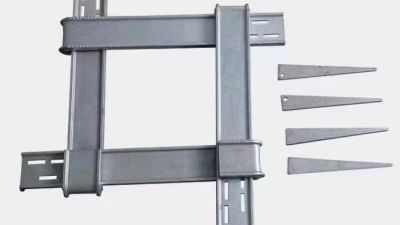
Adjustable square column formwork clamps help maintain panel alignment by forming a perimeter frame around compatible steel panels. Four overlapping steel bars connect with wedge pins, while slotted ends allow positioning across the dimensions supported by the selected model. Folded edges stiffen the bars, and the steel grade and surface finish vary by specification. During a pour, the frame restrains panels from moving outward under fresh-concrete pressure. The American Concrete Institute’s ACI 347R formwork guidance identifies factors such as placement rate, concrete temperature and mixture characteristics as relevant to formwork pressure; clamp capacity therefore depends on bar specifications, column size and clamp spacing, rather than a single universal rating.

This adjustability can support repeatable setup on residential, commercial and industrial projects where square columns vary in size. Crews should select a compatible clamp arrangement and follow project-specific formwork design and installation requirements. The efficiency case is broader than any one component: McKinsey Global Institute’s 2017 report *Reinventing Construction* estimated that construction labor productivity had grown by about 1% annually over the preceding two decades, compared with 2.8% for the global economy. Well-matched clamps can contribute to smoother formwork assembly and secure restraint, while careful spacing and inspection remain essential to stability.

FAQS

What is steel scaffolding?

It is a temporary structure that supports workers, tools, and materials. Steel standards, ledgers, braces, base plates, and platforms form its main parts.

What are the main types of steel scaffolding?

Common types include frame, tube-and-coupler, modular, mobile tower, and suspended scaffolding. Each suits different access needs and site conditions.

When is tube-and-coupler scaffolding useful?

Its separate tubes and clamps fit irregular walls, pipes, and tight corners. Assembly takes care. Many connections need checking.

What is frame scaffolding best suited for?

Prefabricated frames work well along straight walls and repetitive work areas. They are quick to erect but less adaptable around obstacles.

What should workers check on a mobile tower?

Use it on a suitable, level surface and lock its wheels before climbing. Check the braces and platform edges, too. Small details matter.

How does modular scaffolding connect?

Standards have planned connection points for ledgers and braces. Use compatible parts and follow the specified installation arrangement.

What affects a scaffold’s stability?

Ground conditions, loads, loose couplers, bent braces, and uneven base plates can all affect stability. A firm-looking setup may still be unsafe.

Do scaffold categories indicate a universal load rating?

No. Intended-use labels do not provide one universal rating. Check the design, specifications, local requirements, and inspection records. I would not assume the label tells the whole story.

Conclusion

Steel Scaffolding remains a practical choice for construction and maintenance projects because its strength, durability, and adaptable designs support a wide range of working conditions. The best type in 2026 depends on factors such as project height and duration, load requirements, available space, assembly needs, and whether the structure must be moved or reconfigured. Common options include frame, tube-and-coupler, system, and mobile scaffolding, each offering different balances of flexibility, stability, setup speed, and suitability for specific tasks.

Comparing scaffolding systems means looking beyond basic load capacity: site layout, access, ground conditions, weather exposure, and worker movement also matter. Frame systems can suit straightforward projects, while modular or tube-and-coupler designs may better accommodate complex structures; mobile units can help with work that changes location. Before buying, confirm that the chosen system is compatible with the project’s safety requirements, includes suitable guardrails and access components, and meets applicable standards. Regular inspection, correct assembly, and proper use are essential to safe performance.
Nathan

Nathan

Nathan is a dedicated marketing professional with extensive expertise in the field of construction and scaffolding solutions. Since joining Tianjin Jinke Construction, which has been a reputable manufacturer since 1998, he has cultivated a deep understanding of the company's high-quality and......
Previous Why Is a Scaffold Plate Important for Scaffolding?