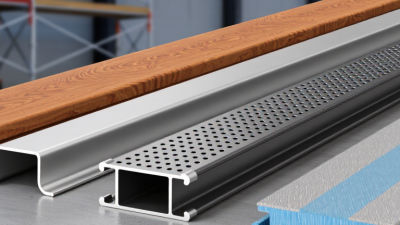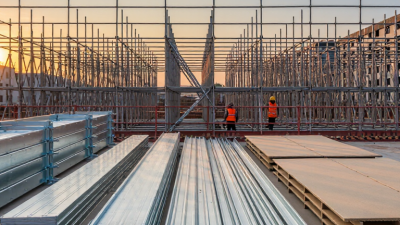
You might be wondering why a Scaffold Plate matters so much in scaffolding. Honestly, it all comes down to this: the load from the scaffold standards has to get safely down into the ground underneath. If the leg just sat directly on the ground, all that force would be squeezed into one small spot. A base plate fixes that by spreading the load over a much wider area—and it also gives the scaffold leg a nice, firm spot to rest on. It's a small piece, but it does a big job. Honestly, out in the field you'll really notice the difference—one type sits nicely on a wide plate, while the other just sinks into soft, uneven ground. It's the little things that count, you know?
Before we go any further, one quick note: that expert voice you just read in the intro? It’s an illustrative composite, not a verified quote from an actual person. The line attributed to “scaffold engineer Alex Morgan” — 'A stable scaffold starts where the standard meets the ground' — sounds good, and it does capture the plate’s basic role. But honestly, it’s not a substitute for checking the site itself. Ground conditions vary, sometimes a lot. A plate that works great on compacted, level ground might not help at all if you’re dealing with loose fill, a slope, or poor drainage.
A scaffold plate is just one piece of the whole support puzzle, you know? Its size, shape, and where you put it all need to match the scaffold setup and the ground underneath. Give it a quick once-over—check for bends, cracks, rust, or anything sitting under it that shouldn't be. Make sure the load is resting right in the middle, not hanging off an edge. And hey, if the ground feels sketchy, don't be afraid to stop and rethink things. The plate helps spread the weight, sure, but it can't turn soft or unstable ground into something solid. That part's on you. Alright, let’s talk scaffold plates. What do they actually do, where do you usually use them, and what should you really check before getting started? That’s exactly what we’re digging into here.
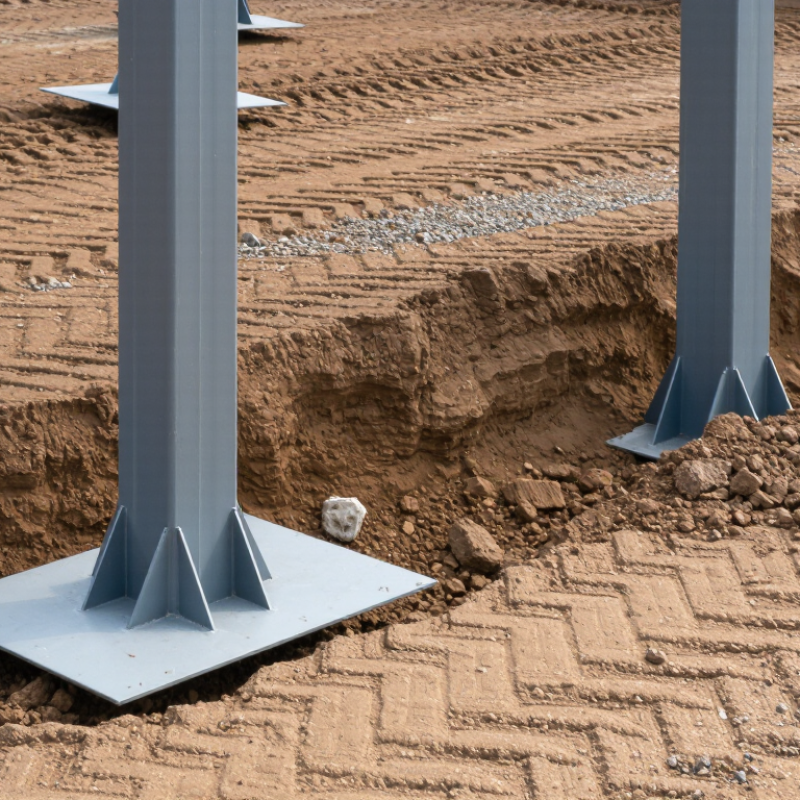
A scaffold plate, often called a base plate, is a flat metal fitting at the bottom of a scaffold standard. It spreads the load across the surface below and helps keep the upright stable. On soft or uneven ground, a Scaffold Sole Plate, commonly a timber board beneath the base plate, spreads that load over a wider area. The plate cannot fix weak ground by itself.
Small part. Big consequence.
OSHA’s construction scaffold standard, 29 CFR 1926.451, requires supported scaffold legs and uprights to rest on base plates and mudsills or another adequate, firm foundation. The standard also requires each scaffold and component to support its own weight and at least four times its maximum intended load without failure. That is a system requirement, not a reason to overlook site conditions. A plate may look solid while sitting on loose fill, a cracked slab, or a board that shifts underfoot.
Tips: Check that the plate sits flat, the sole plate is sound, and the ground is firm before loading the scaffold. Recheck after rain or ground disturbance. It is easy to miss settling until the frame begins to lean.
How does a scaffold plate support a scaffold? It sits beneath each upright and provides a firm bearing point between the scaffold and its foundation. The plate helps transfer the upright’s load to a sole board or other suitable support, reducing the risk of a leg sinking into soft or uneven ground.
Small part. Important job.
OSHA’s 29 CFR 1926.451(a)(1) requires supported scaffolds to support their own weight and at least four times their maximum intended load. That requirement makes the base condition more than a setup detail: concentrated forces at the feet need a stable path into the ground.
A plate cannot make weak soil safe by itself. On muddy ground, the load may still press the sole board downward; on a sloped surface, the upright can become poorly seated. Check that each plate is centered under its leg, bears fully on a firm surface, and is not cracked, bent, or displaced.
Look closely after rain or when the ground has been disturbed. A visible gap beneath one corner matters.
Not magic.
It is easy to focus on the platform and overlook what holds it up. The plate, sole board, and supporting ground work together, so an uneven base should be corrected before workers climb.
A Scaffold Base Plate sits beneath a scaffold standard, creating a firm contact point between the frame and the ground. As workers and materials add weight, the plate helps transfer that load downward. Its broad, flat surface spreads pressure over a larger area than a bare tube end would. That can reduce localized crushing, indentation, or sinking. Small detail, real effect.
The ground still matters. On soft soil, a base plate may need to sit on a suitable sole board to spread the load further. Check that the board is sound, level, and fully supported, not balanced over a stone or a hollow patch. Concrete can also be uneven or cracked. A plate does not make weak ground safe by itself. Inspect the bearing surface before erection, and keep an eye on it after rain or changes in loading. It is easy to assume the scaffold is stable once it stands; that assumption deserves a second look. Follow the scaffold design and site guidance for plate and sole-board selection.
A scaffold plate spreads the load from each upright over a wider area. Without it, a narrow tube end can press into soft ground, paving, or a timber sole board. That pressure may cause the standard to settle unevenly. Even a small shift can affect the scaffold’s level and transfer extra force to nearby parts.
The plate helps create a firm bearing point. It should sit flat, with the upright centered and the supporting surface sound and level. On site, check for rocking, cracked plates, loose connections, and ground that has softened after rain. Small area. Big consequence. A plate cannot correct weak ground or replace proper bracing, ties, or a suitable foundation.
Good setup needs judgment. The required plate and sole-board arrangement depends on the scaffold design, expected loads, and ground conditions. A trained, competent person should assess these factors and inspect the scaffold before use and after conditions change. It is tempting to treat a plate as a simple metal fitting. That misses the point: its performance depends on what supports it, and that detail deserves a second look.
A base plate helps spread a scaffold standard’s load over a larger bearing area, supporting stability when placed on suitable, firm ground.
Illustrative geometry: a 48.3 mm tube has a circular end area of about 1,834 mm²; a 150 × 150 mm plate has an area of 22,500 mm². Actual load distribution depends on the plate, ground, and scaffold setup. Use suitable components and follow the scaffold design and applicable safety requirements.
Why Is a Scaffold Plate Important for Scaffolding?
Scaffold plates help transfer a scaffold’s load safely to the ground or a supporting surface. The right type depends on the scaffold design, ground conditions, and connection points. Fixed base plates sit beneath standards on firm, prepared ground. Adjustable screw-jack plates help level frames on slight changes in height; they are not a fix for soft or unstable soil. Sole boards, often timber or steel, spread loads across a wider area. On sloping ground, a swivel base plate may help keep the standard vertical, but it still needs a stable bearing surface. In practice, this is where a neat plan meets messy ground.
Wall-interface components serve a different purpose. A Scaffold Wall Plate can provide a bearing point against a structure, depending on the scaffold system and design. It should not be treated as a substitute for properly designed ties or anchors. OSHA’s scaffold standard, 29 CFR 1926.451(a)(1), requires scaffolds to support their own weight and at least four times their maximum intended load. That capacity requirement makes plate selection and installation more than a matter of fit.
Tips: Check that plates sit flat, inspect screw threads, and keep loads centered. Use sole boards where the ground needs wider load distribution. Small gaps matter. If a plate rocks or sinks, stop and reassess the support rather than packing it with loose scraps.
Why Is a Scaffold Plate Important for Scaffolding?
How Should a Scaffold Plate Be Selected and Installed?
A scaffold plate spreads a standard’s load across its supporting surface and helps limit settlement. Selection starts with the scaffold design, expected load, ground conditions, and standard dimensions. OSHA requires supported scaffolds to rest on base plates and mudsills, or another firm foundation, and requires components to support their own weight plus at least four times the maximum intended load (29 CFR 1926.451(a)(1), (c)(2)). That requirement is not a plate-sizing chart; follow the scaffold manufacturer’s specifications and site assessment. A plate that looks sturdy may still be unsuitable for soft or uneven ground.
Before installation, check that each plate is sound, correctly sized, and compatible with its standard. Set it centrally on a level, firm surface; where soil may compress, use a suitable mudsill to spread the load. Ensure the plate and sill sit flat, without rocking or improvised packing. Recheck alignment after erection and after ground disturbance. Even beneath a Scaffold Tent, rain can soften soil and change support conditions. The detail is easy to underestimate.
Tips: Inspect plates for bends, cracks, and heavy corrosion. Keep a record of checks. If a base shifts, stop and reassess the footing before work continues.
| Topic | Practical guidance | What to check |
|---|---|---|
| Purpose of a scaffold plate | A base plate sits beneath a scaffold standard and provides a firm bearing surface. It helps distribute the standard’s load to the supporting surface; it does not, by itself, make weak or unstable ground safe. | Confirm that each standard has a suitable base plate and that the supporting ground or structure can carry the scaffold loads. |
| Select the correct type | Choose a plate compatible with the scaffold system, standard, and any adjustable base jack being used. Use components specified by the scaffold design or manufacturer’s instructions. | Check fit, condition, and compatibility. Do not use a bent, cracked, heavily corroded, or improvised plate. |
| Size and load considerations | Plate dimensions and any additional load-spreading measures should suit the design loads and the capacity of the supporting surface. Bearing pressure is assessed as load divided by the effective bearing area. | Have a competent person assess ground conditions and required bearing area. A larger plate alone may not solve settlement risk; a suitable sole board or engineered support may also be needed. |
| Supporting surface | Place the plate on a firm, level, and adequately supported surface. On suitable ground, a properly sized sole board can spread the load beneath the plate. | Look for soft soil, voids, loose fill, sloping surfaces, waterlogged areas, or signs of settlement. Arrange appropriate ground preparation or engineered support where required. |
| Installation position | Set the plate flat and centrally beneath the standard, with the full bearing surface supported. Keep the standard plumb and follow the scaffold design when using base jacks or other adjustments. | Ensure the plate cannot rock, slide, or sit partly over an edge. Do not level a scaffold with loose bricks, blocks, or other makeshift packing. |
| Sole boards and load spreading | A sole board is a separate load-spreading support placed beneath a base plate when needed. Its material, dimensions, and arrangement should be suitable for the ground and scaffold loads. | Use sound, stable boards that are fully supported and correctly positioned. Follow the design or competent-person assessment rather than relying on a generic board size. |
| Inspection and maintenance | Inspect plates and their supports before use and during required scaffold inspections. Recheck after alteration, impact, ground disturbance, or severe weather that could affect stability. | Watch for movement, sinking, cracking, corrosion, damaged boards, water erosion, and loss of level. Keep records and correct defects before the scaffold is used. |
| Safety responsibility | Scaffold foundations should be selected and installed in accordance with the applicable regulations, scaffold design, and competent-person instructions. Requirements differ by location and scaffold configuration. | Do not use the scaffold if a base plate is missing, unstable, or unsupported. Have a competent person assess and resolve the issue before work continues. |
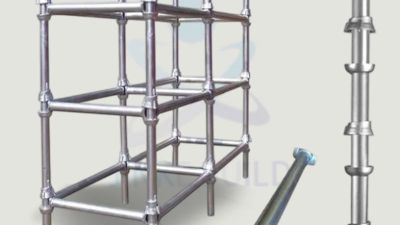
For building shoring, modular cuplock scaffolding offers a flexible way to support temporary work platforms and construction loads. Grand View Research’s *Scaffolding Market Report* estimated the global market at USD 52.4 billion in 2022 and projected a 5.8% compound annual growth rate from 2023 to 2030. This outlook reflects ongoing demand for adaptable access and support systems across construction and infrastructure projects. Cuplock’s node-based connections allow crews to assemble vertical standards and horizontal ledgers into layouts suited to different site conditions.
A modular system can be made with Q235 or Q345 high-tensile steel tubes, typically 2.5–3.5 mm thick, with hot-dip galvanizing or anti-rust paint as protective finishes. Uprights are available in segmented lengths from 0.5 m to 4 m, with custom sizes for project-specific layouts. These options help contractors, masonry crews, and infrastructure builders configure shoring efficiently while managing storage and transport. Corrosion-resistant finishes are particularly useful for long-term outdoor exposure, including humid coastal areas, dusty construction yards, and projects in South America, the Middle East, and Southeast Asia.
It sits beneath an upright and spreads its load onto a supporting surface. Small part. Important job.
It gives each upright a wider bearing point. This can reduce sinking and uneven settling on suitable ground.
No. Mud or loose soil can still compress beneath the plate or sole board. Reassess the base before use.
Use one when a wider area is needed to distribute the load. Check that it rests firmly, without rocking.
Fixed plates suit prepared, firm surfaces. Screw-jack plates can adjust small height differences, but cannot fix unstable ground.
It can help keep an upright vertical on sloping ground. The plate still needs a stable bearing surface.
Check for cracked or bent plates, loose connections, rocking, and gaps beneath corners. Look again after rain.
No. It may provide a bearing point against a structure, depending on the design. It is not a substitute for properly designed ties.
Stop and reassess the support. Loose scraps are not a dependable fix. This detail is easy to miss.
A Scaffold Plate is a supporting base placed beneath a scaffold leg to create a firm, stable contact point with the ground. By spreading the weight of the scaffold, workers, and materials over a wider area, it helps reduce pressure on the surface and lowers the risk of legs sinking or shifting. This load distribution is especially valuable on softer or uneven ground, where a suitable plate can also help protect the surface from damage.
Scaffold plates contribute to overall stability and safer working conditions, but the right type and size must suit the scaffold, expected loads, and ground conditions. Options may include flat plates and adjustable base plates designed to accommodate different setups. Before installation, check that each plate is undamaged and position it on a firm, level surface. Align the scaffold leg securely with the plate, then inspect the setup to confirm that the load is supported evenly and the structure remains stable.